 Reviews

 Proudly American

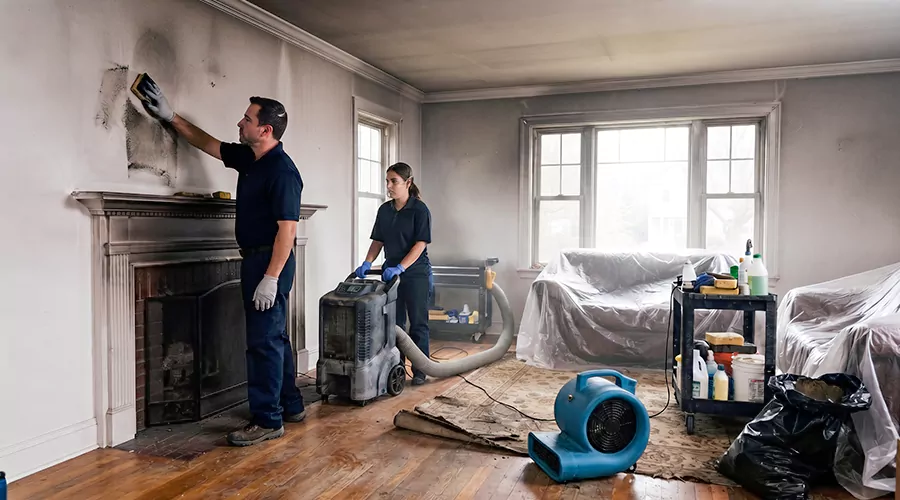
Smoke damage repair can cost from a few hundred dollars for one lightly affected room to several thousand dollars when soot or odor spreads throughout a home. In 2026, smoke treatment often costs about $200 to $1,200 per room while larger soot-removal projects can reach $2,000 to $6,000. When smoke damage occurs alongside water used during firefighting, water remediation may also be needed to address moisture and prevent additional damage.
Repair begins by identifying the type and extent of residue. Loose soot must be removed before walls or other surfaces are washed because rubbing dry soot can push particles deeper into finishes.
Smoke may affect rooms that were never touched by flames. Odor can also remain inside porous materials after visible staining has been cleaned.
What Does Smoke Damage Do to a Home?
Smoke damage leaves fine particles and chemical residues on surfaces throughout a home. Some deposits remain dry while others become greasy or sticky. These residues can stain walls or damage finishes if the wrong cleaning method is used. Odor can also move into fabrics or unfinished wood.
Commonly affected materials include:
- Painted walls
- Ceilings
- Cabinets
- Hardwood surfaces
- Carpet
- Upholstered furniture
- Clothing
- HVAC registers
- Insulation
- Electronics
Smoke damage from fire often extends beyond the room where the fire started. Air movement can carry soot through open doors and ventilation pathways.
A kitchen fire provides a common example. Flames may stay near the stove while smoke coats the ceiling and adjacent hallway.
The first repair decision should therefore be based on the entire affected area rather than the visible burn location.
What Should You Do Before Cleaning Smoke Damage?
Before cleaning begins, confirm that the building is safe to enter and photograph visible damage. Fire-damaged electrical systems or weakened structural materials require attention before ordinary cleaning starts. Loose soot should also be handled carefully because touching it can smear residue into painted surfaces.
Start with these steps:
- Wait until the property has been cleared for entry.
- Photograph smoke stains before cleaning.
- Identify rooms with visible soot.
- Check for water left from firefighting.
- Keep foot traffic through affected areas low.
- Protect clean rooms from tracked residue.
- Remove obviously damaged items only when safe.
Avoid turning on an HVAC system immediately after a significant fire if heavy soot remains in the building. Air movement can spread loose particles into areas that were previously less affected.
Smoke damage cleanup works better when contamination is controlled before aggressive cleaning begins.
How to Repair Smoke Damage in a Home Step by Step?
Smoke damage repair should move from dry residue removal to surface cleaning before odor treatment begins. Washing too early can turn loose soot into a difficult stain. Damaged materials should be separated from surfaces that can still be cleaned and kept.
Step 1: Remove Loose Soot First
Start by removing loose dry soot without scrubbing it into the surface.
A HEPA vacuum can be useful for fine residue when the material is suitable for vacuuming. Keep the nozzle slightly above delicate surfaces rather than dragging it across painted walls.
Focus on:
- Ceiling edges
- Wall surfaces
- Window trim
- Cabinet faces
- Shelving
- Upholstery surfaces
- Accessible vents
Soot clean up should begin gently because aggressive rubbing can grind black particles into paint.
A dry chemical sponge can also lift residue from some walls before wet cleaning begins.
Step 2: Test a Small Area
Different smoke residues respond differently to cleaning products. Test any cleaner on a small hidden section before working across an entire wall.
Watch for:
- Paint discoloration
- Gloss changes
- Softened coatings
- Streaking
- Surface damage
The test area also reveals whether the residue is mostly loose or oily.
Greasy smoke from a cooking fire can require more detergent than dry soot from another type of fire.
Step 3: Clean Smoke Damage on Walls
Smoke damage on walls should be cleaned only after loose soot has been removed. Start at a lower section and work in controlled areas so dirty solution does not run across an already cleaned surface.
Use a cleaning product that is safe for the wall finish.
A basic process is:
- Remove loose surface soot.
- Prepare the cleaner according to its directions.
- Test an inconspicuous area.
- Clean a small section.
- Rinse when required.
- Allow the wall to dry.
- Recheck the area for staining.
Avoid soaking drywall. Excess water can damage the paper surface while adding moisture to the wall.
Smoke damage cleaning can require more than one pass when oily deposits remain.
Step 4: Clean Ceilings Carefully
Ceilings often collect heavy smoke because hot air rises during a fire. They can also be harder to clean evenly because soot may cover large areas.
Begin with dry removal before introducing a cleaning solution.
Do not scrub aggressively over textured ceiling material. Some older ceiling finishes can also contain materials that should not be disturbed without proper evaluation.
If the ceiling remains stained after cleaning then repainting may become part of the repair.
Step 5: Clean Hard Surfaces
Hard surfaces are usually easier to recover than porous materials.
These can include:
- Tile
- Glass
- Metal
- Sealed countertops
- Finished cabinet surfaces
Wash away soot using a compatible detergent. Change cleaning water frequently because dirty solution can redeposit residue onto the surface.
Fire smoke damage restoration often saves more hard surfaces than porous materials because contamination remains closer to the exterior.
Step 6: Evaluate Porous Materials
Porous materials can absorb smoke odor below the visible surface. Cleaning the exterior may improve appearance while odor continues escaping from deeper layers.
Materials that deserve closer inspection include:
- Carpet padding
- Upholstery foam
- Mattresses
- Insulation
- Unfinished wood
- Heavily affected drywall
Smoke remediation becomes more difficult once odor has moved deeply into these materials.
A sofa may look clean after surface treatment while the cushion foam still releases odor several days later.
Step 7: Address Smoke Odor After Cleaning
Odor treatment should come after soot and residue have been physically removed. Fragrance products can temporarily cover smoke smell but they do not remove the material causing it.
Fire smoke odor removal can involve:
- Repeated fabric washing
- Cleaning unfinished surfaces
- Replacing contaminated porous materials
- Activated carbon filtration
- Thermal fogging in appropriate situations
- Hydroxyl treatment in some projects
Source removal matters more than masking.
If smoke smell returns when the house has been closed for several hours then contaminated material may still remain.
Can Smoke-Damaged Drywall Be Repaired?
Smoke-damaged drywall can sometimes be kept when it remains firm and contamination is limited to the painted surface. Cleaning followed by a stain-blocking primer may be enough. Replacement becomes more likely when drywall is deeply stained or physically damaged by water from firefighting.
Use this comparison:
| Drywall Condition | Likely Response |
|---|---|
| Light surface soot | Clean and evaluate |
| Minor staining | Clean then prime |
| Persistent odor | Inspect deeper contamination |
| Water-softened drywall | Remove damaged section |
| Heavy soot penetration | Replacement may be needed |
| Burned drywall | Replace affected material |
A wall that still smells strongly after cleaning may have contamination behind the painted surface.
Fire smoke damage repair should therefore separate cosmetic staining from deeper material damage.
Can Smoke-Damaged Wood Be Saved?
Finished wood can often be cleaned when soot remains on the surface. Unfinished wood absorbs smoke more readily because open pores allow odor to move deeper into the material. Light sanding can sometimes help after surface cleaning if the wood itself remains structurally sound.
Inspect wood for:
- Surface soot
- Persistent odor
- Heat discoloration
- Warping
- Charring
- Water staining
Do not assume every dark area is soot. Heat can permanently change the wood color while firefighting water can create separate staining.
Cleaning up soot after a fire should happen before refinishing decisions are made.
How Much Does Smoke Damage Repair Cost in 2026?
Smoke damage repair costs depend on the number of affected rooms and the amount of soot present. In 2026, smoke treatment commonly costs about $200 to $1,200 per room. Larger soot-removal projects often fall around $2,000 to $6,000.
A useful planning range is:
| Type of Work | Typical 2026 Cost |
|---|---|
| Light smoke cleaning | $200 to $600 per room |
| Moderate smoke treatment | $600 to $1,200 per room |
| Soot removal | $2,000 to $6,000 |
| Duct cleaning | $250 to $500 |
| Furniture deodorizing | $200 to $1,000 |
| Thermal fogging | $200 to $600 per floor |
The final smoke damage repair cost can increase when surfaces need repainting after cleaning.
Replacement also changes the budget. New drywall or flooring can make a smoke cleanup project much more expensive than surface treatment alone.
How Does Smoke Damage Get Worse Over Time?
Smoke residue can become harder to remove when it remains on surfaces for a long period. Oily deposits can penetrate paint while odor can move deeper into porous materials. Firefighting water can create another problem if wet materials remain inside the same affected rooms.
A general progression looks like this:
| Stage | Typical Condition | Likely Repair Level |
|---|---|---|
| Early | Loose soot on hard surfaces | Dry removal and cleaning |
| Moderate | Staining on walls | Cleaning plus primer |
| Advanced | Odor in porous materials | Deodorization or removal |
| Severe | Heavy soot across many rooms | Broad remediation |
| Structural | Burned or water-damaged materials | Repair and reconstruction |
Smoke and soot damage after a fire should therefore be addressed before repainting begins.
Painting over soot can trap odor while also causing poor adhesion.
The clean surface must be dry before primer or new paint is applied.
What Warning Signs Mean Smoke Damage Is More Serious?
More extensive damage is likely when smoke staining appears in several rooms or odor returns after cleaning. HVAC contamination can also spread residue beyond the original fire area. Porous materials that hold odor deserve closer attention because surface cleaning may not reach the source.
Watch for these 10 signs:
- Soot appears in rooms away from the fire.
- Walls remain dark after dry cleaning.
- Smoke odor returns overnight.
- HVAC vents contain visible residue.
- Ceiling stains cover large areas.
- Upholstery still smells after cleaning.
- Cabinets release odor when opened.
- Paint begins peeling after exposure.
- Insulation smells strongly of smoke.
- Firefighting water damaged nearby walls.
Smoke damage remediation becomes more involved when several of these signs appear together.
A house that smells clean while windows are open may smell very different after remaining closed overnight.
What Can You Safely Check Yourself?
You can perform a simple white-cloth test after loose soot has been removed. Wipe a small cleaned area with a clean white cloth and check whether dark residue transfers onto it. Repeat the test in several rooms to identify areas that still contain surface contamination.
Use this process:
- Choose a cleaned hard surface.
- Use a clean white cloth.
- Wipe lightly once.
- Check for gray or black transfer.
- Repeat in another location.
- Photograph areas that still transfer residue.
Do not use this test on fragile artwork or delicate fabrics.
The test does not measure hidden smoke inside walls. It simply helps determine whether visible surface cleaning has removed loose residue.
When Should You Call a Professional?
Professional help becomes appropriate when heavy soot affects several rooms or smoke has entered HVAC components. Persistent odor after careful cleaning can also point to contamination inside porous materials. Structural fire damage or electrical damage should be evaluated before ordinary household repairs continue.
Consider professional help when:
- Several rooms have heavy soot.
- Smoke entered the HVAC system.
- Odor remains after repeated cleaning.
- Insulation is contaminated.
- Large ceiling areas are affected.
- Firefighting water entered walls.
- Structural materials were burned.
- Electrical components were exposed.
- Upholstery contains deep smoke odor.
- You cannot identify the source of lingering smell.
A fire smoke damage restoration project may require specialized cleaning methods when normal washing cannot remove the residue.
Professional assessment is also useful when cleaning risks damaging expensive wood finishes or other sensitive materials.
How Can You Prevent Smoke Odor From Returning?
Smoke odor returns when residue remains somewhere in the building. The best prevention is complete source removal before painting or replacing finishes. Cleaning air alone will not solve odor that continues escaping from contaminated insulation or unfinished wood.
Use these steps:
- Clean soot before applying primer.
- Replace materials that cannot be cleaned.
- Wash washable fabrics separately.
- Clean cabinet interiors.
- Inspect HVAC registers.
- Check unfinished wood for odor.
- Dry water-damaged materials fully.
- Replace contaminated insulation when needed.
- Use stain-blocking primer on suitable cleaned walls.
- Recheck closed rooms for returning odor.
Smoke damage cleaning should be considered complete only when the residue source is gone.
A deodorizer can improve the room temporarily but cannot repair a contaminated wall cavity.
Conclusion
Smoke damage repair starts with removing loose soot before washing surfaces or treating odor. Walls and finished wood can often be saved when damage remains near the surface. Porous materials may require deeper treatment when smoke has penetrated them. If odor returns or heavy soot affects several rooms then a professional assessment may be appropriate. This week, inspect vents and closed cabinets for smoke residue that may have been missed.
Frequently Asked Questions
Can you paint over smoke-damaged walls?
Not directly. Soot should be removed first and the wall should be dry before a suitable stain-blocking primer is applied.
Will smoke smell eventually disappear on its own?
It can fade but persistent odor usually means smoke residue remains inside a material. Removing the source works better than waiting for the smell to weaken.
Can vinegar remove smoke damage?
Vinegar may help with some odors but it is not a complete soot-removal method. The cleaning product should match the affected surface and residue type.
How long does smoke damage cleaning take?
One lightly affected room may take a day or two. A larger home can take several days or longer when odor treatment and material removal are required.
Does smoke damage always require replacing drywall?
No. Drywall can often remain when the board is firm and soot stays near the painted surface. Deep contamination or water damage can make replacement more appropriate.
Can smoke damage spread through air ducts?
Yes. Smoke particles can enter HVAC pathways during a fire. Running the system before heavy residue is removed can spread contamination into additional areas.